
Where Old West Virginia Mugshots Survive
Old booking photos in West Virginia do not sit in one tidy place. The State Archives is the deepest well. Its correctional holdings come from the Department of Corrections. They include material from West Virginia Penitentiary, West Virginia Medium Security Prison, and the State Prison for Women. Some series document people held in custody. That does not promise a photo. A portrait, inmate card, admission register, or prison photograph may exist for reasons far from booking, and each can carry its own access rule.
Pictures can also live apart from the case file. Negatives survive from Pence Springs State Prison for Women. Mid-century prints and contact sheets from West Virginia State Penitentiary appear in the same catalogs. Historic newspapers add more. So do county court records, library collections, and private photograph accessions. A search that finds no online photo proves nothing. The record may hide under a facility, case, county, or collection title rather than the person's name.
Start with the Archives' correctional collections descriptions for anyone tied to a state institution. Read the scope and restrictions first. Then ask about a copy. For a county arrest, also contact the county clerk or the sheriff's records custodian, since the court file and the correctional file answer different questions.
The State Archives collections page shows descriptions, not individual booking photos. Use record titles to narrow a request. Staff can then search a name with real focus.
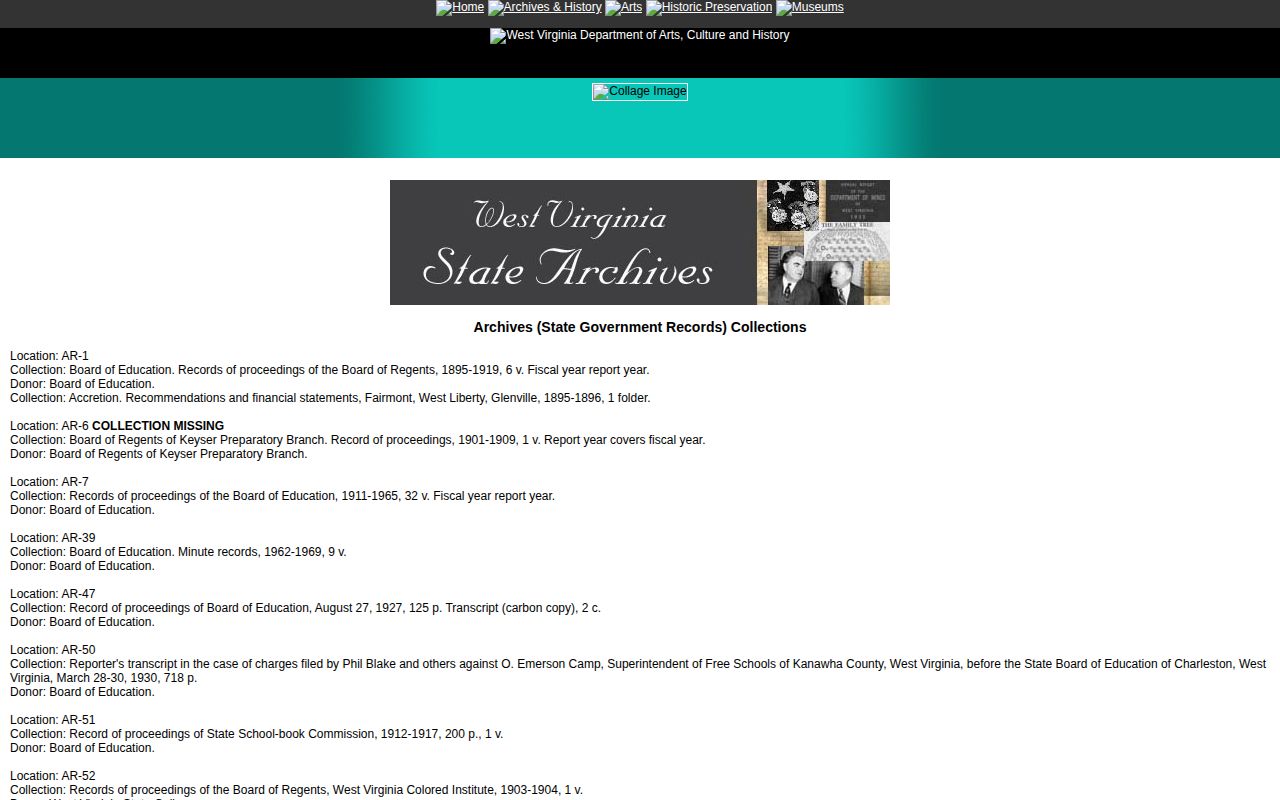
AR-1804 holds Department of Corrections penitentiary records from roughly 1935 to 1953. Privacy law limits parts of it. The title is a lead, not a promise.
West Virginia Archive Inventory
These State Archives holdings show the range of material behind an older arrest or prison record. Date ranges describe collections. They do not bound any single file. Before paying for a reproduction, ask whether the exact item is cataloged, whether it is open, and whether it holds a photograph.
| Collection | What it covers | Era | How to access |
|---|---|---|---|
| AR-1804, Department of Corrections penitentiary records | State penitentiary records; restrictions may apply. | About 1935–1953 | Review the State Archives collection description, then ask staff about access. |
| Prison photograph accessions | Pence Springs negatives and West Virginia State Penitentiary negatives, prints, glass plate, and contact sheets. | Pence Springs material from about the 1920s–1940s; other material includes mid-century items | Check the photograph accession list and ask about a specific item. |
| West Virginia Memory photo database | A searchable selection of the state's visual history, not the full holdings. | Multiple eras | Search the online database; arrange an Archives visit for broader research. |
| State Prison for Women finding aid | Record-series descriptions that include inmate-card material; a card is not necessarily a mugshot. | See the finding aid for its series dates | Read the finding aid and request the series by name. |
| Harrison County Circuit Court records for Harry Powers | Indictment, evidence, court record, sentence, and appeal materials. | Quiet Dell case, 1931–1932 | Use the AR1965 finding aid to identify the court collection. |
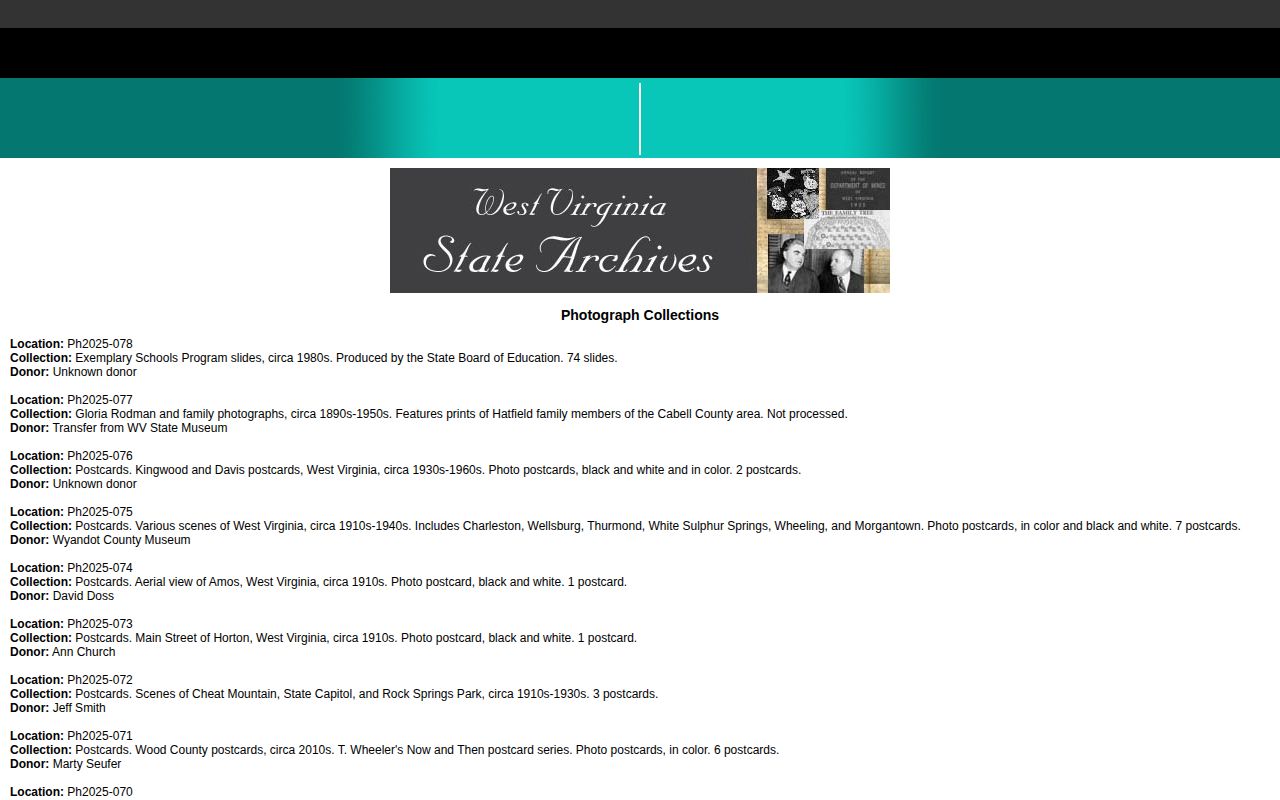
The photograph accessions list catalogs the kinds of historical images at the State Archives. Entries name institutions and formats. No entry promises a specific person's photo.
Labels matter when you describe an image. Keep its original label and source. Do not call a period portrait or institutional photograph a mugshot unless the record itself proves it was made as a booking photo.
Note: An Archives catalog entry identifies a collection or series, while a separate staff check is needed to confirm a specific person's file.
West Virginia Inmate Card Finding Aids
Start with a finding aid. That is the archivist's map to a collection, naming each record series with its dates so staff can pull boxes that never made it online. The State Prison for Women finding aid covers inmate-card material. An inmate card may hold identifying details or custody facts, but a card is not a mugshot. Before you assume what a box holds, ask whether the series includes photographs, admission registers, penitentiary files, or court case records.
The Harry Powers collection shows how a paper trail gets described. A State Archives finding aid for his Harrison County Circuit Court case covers the indictment, the evidence, court records, the sentence, and the appeal. That is the honest route to a legal outcome. A modern repost of an old portrait tells you far less. The Archives' historical account and transcript help pin down the case, and the finding aid points to the preserved court file itself.
Online discovery only reaches so far. West Virginia Memory holds more than 100,000 images. Still, only a fraction of the state's visual material appears online. The photo introduction recommends an appointment for in-person research. Try the West Virginia Memory photo database with likely names and subjects, then ask staff about related material not shown in the public interface.
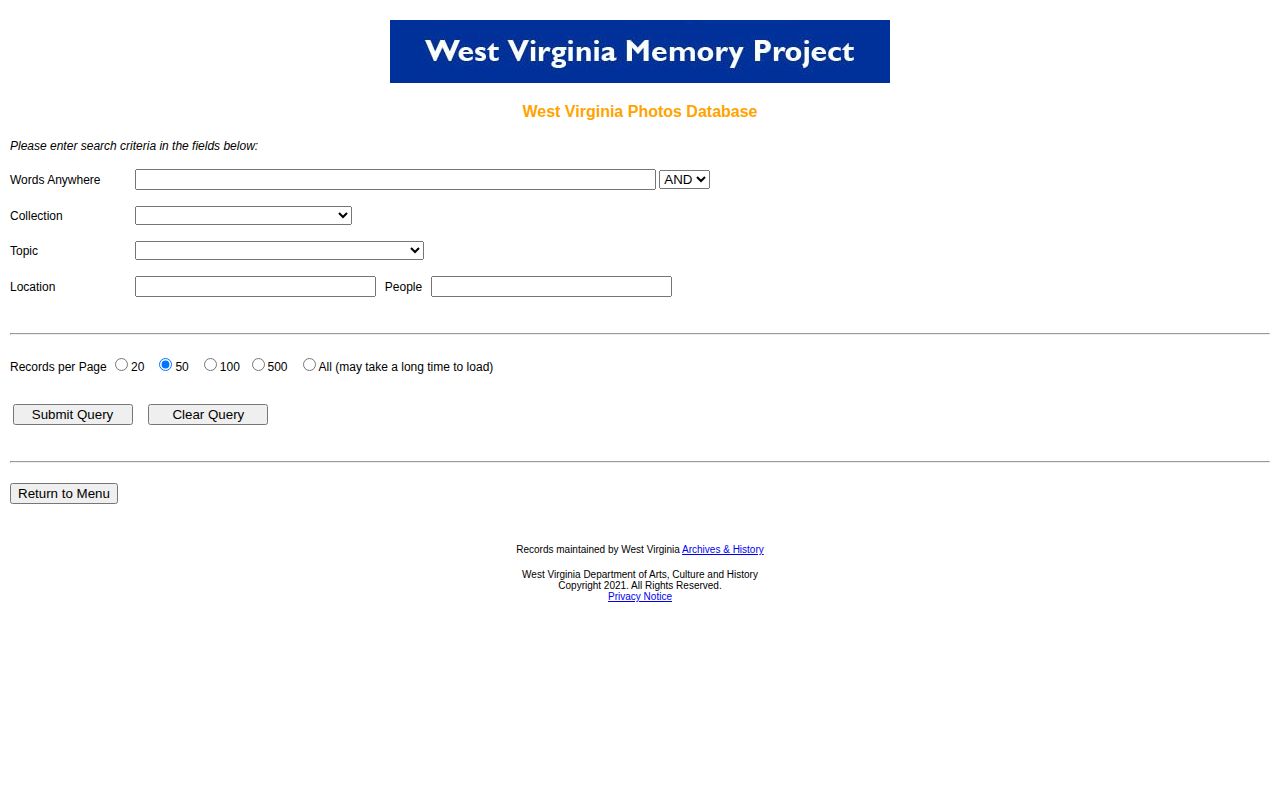
The West Virginia Memory photo database opens on a search view, not a gallery of individual portraits. Good search terms include a full name, a known alias, the facility, or the place a case was heard.
Record the catalog title and accession details. Then confirm what the image shows and whether reproduction is allowed. An empty result is not proof. Ask staff about neighboring files or unscanned collections instead of giving up.
West Virginia Booking Photo Retention
No single rule covers every West Virginia booking photo. Retention depends on the agency and its record series. Sheriffs, police departments, regional jails, and state offices each follow their own schedules. Those schedules set minimum retention periods. They also cover transfers, appraisal, and authorized disposal. A booking photo often sits inside a larger arrest or jail file rather than a named permanent series. A general schedule heading is not a promise of eternal storage.
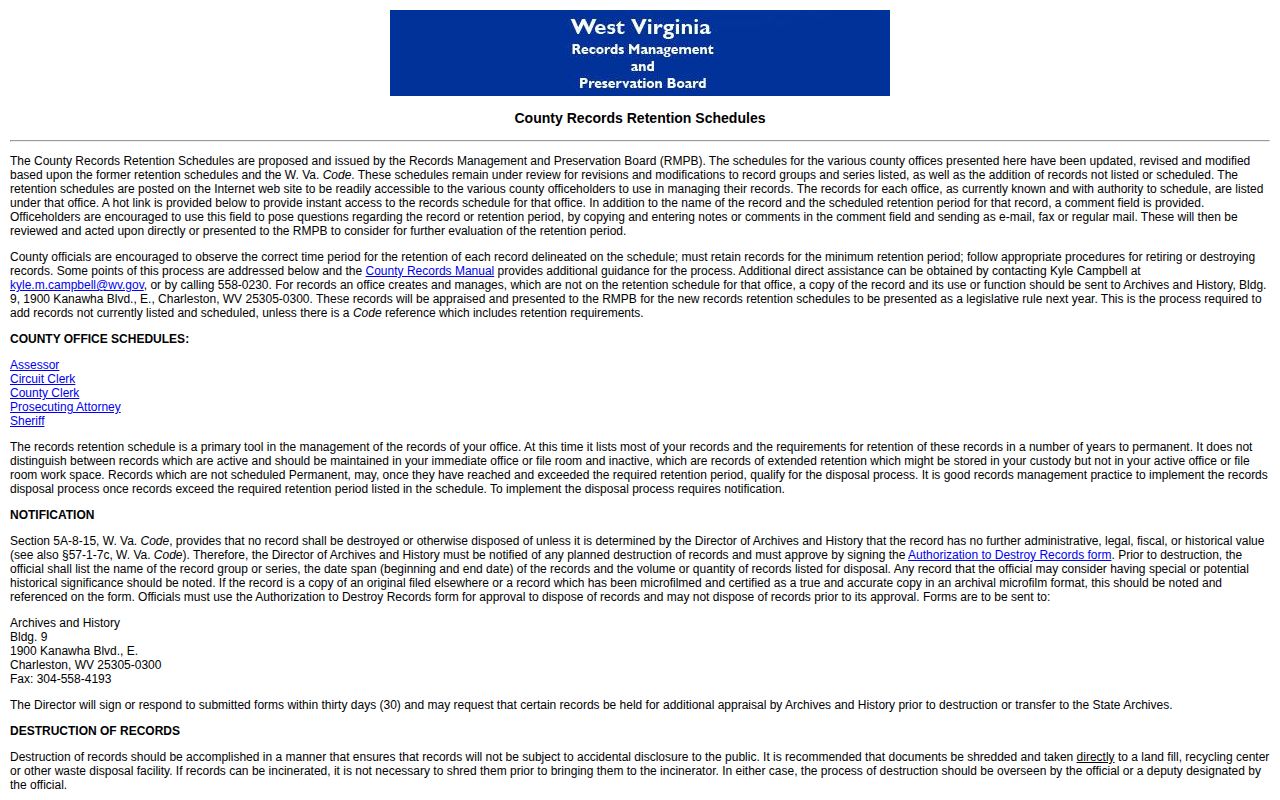
The County Records Retention Schedules lay out the approved system. For a sheriff's records, start with the sheriff-specific schedule. The records-management manual warns that no agency should destroy records before an approved schedule permits disposal. State records follow a different path. The State Records Center handles transfer and retrieval under each agency's schedule. Treat the county schedule page as management guidance, not a chart of one universal photo age-out date.
Ask the current custodian which series covers the arrest record and its photo. Then ask what happened to the file. It may have been transferred, destroyed under an approved schedule, or withheld. A privacy restriction is another possible cause. A gap online means little by itself. It can reflect a system change, lawful disposal, or a confidentiality rule. It may also mark a record that was never posted publicly.
Never assume modern regional-jail photos move to the Archives. Recent records usually stay with the Department of Corrections, the arresting agency, or the facility. Older institutional and court material may sit at the Archives or a county office.
Note: A schedule sets the approved handling of a record series, but the custodian must identify which series applies to the photo and booking file.
Request West Virginia Historical Records
The State Archives answers written research requests. It limits how many questions it will take and how specific each must be. Research and copy charges may apply. Describe the item before asking for a reproduction. A finding aid or collection title helps. A name alone travels poorly. Without a date, county, facility, or case context, a request can be hard to match in an unindexed collection.
The Archives services page explains the written request path and current service limits, so check it before mailing a request or planning a visit.
Use this sequence to make a focused request:
- Choose the likely custodian. Use the State Archives for historical correctional, photograph, or court collections. For a recent booking, start with WVDCR, the arresting agency, or the facility. For a county case file, contact the county clerk or sheriff as well.
- Give identifying details. Include the full name and aliases, approximate year or date range, county, facility, and known case number. State whether you are seeking a photo, inmate card, admission register, arrest record, or court file.
- Name a collection if possible. Cite the finding-aid title or record-series number, such as AR-1804 or AR1965, and ask whether the item exists and is open to research.
- Ask about limits and cost. Confirm research-question limits, research charges, copy fees, privacy or donor restrictions, and whether the item can be reproduced before requesting copies.
- Follow the transfer trail. If the Archives has no record, ask the agency which retention schedule applied and whether the material went to another custodian or was disposed of under that schedule.
Give the Archives one narrow question per record type. A case disposition, an inmate card, and a photograph may each need its own search. If the State Archives lacks the item, try elsewhere too. Ask the county clerk and sheriff in parallel. That can surface a local court file or a retained agency copy.
Note: Written requests work best when they identify a person, date range, county, facility, and a specific record type or collection.
West Virginia Recent vs Old Records
New records and old ones have different custodians. A fresh arrest starts with a local police department or sheriff. The person may then sit in a regional jail that serves several counties. Keep the arresting county, booking agency, and current facility straight. The statewide West Virginia arrest and booking overview maps current official lookup paths. It also shows how to move from a county roster to the agency that created the record.
For an older case, work two angles. Use the County Directory to find the office that may hold a court or sheriff record. The office may hold a sheriff record instead. Then search the Archives finding aids for state collections. A missing web result proves nothing. The record may simply have aged out of an interface. A surviving prison record, though, does not prove a modern booking photo exists.
What may survive: a court file, inmate card, admission register, prison record, newspaper account, or institutional photograph. What may not: a public digital copy, a separately filed booking photo, or permission to copy restricted or fragile material. Ask each custodian to confirm the record and its limits.
West Virginia expungement orders can reach law-enforcement records. When a case carries an order, ask the custodian how it applies. Ask how it applies to the record you want. Do not assume an archival copy or a third-party copy shares the same status. The official record holder can explain its duties and the current record path.