
Do West Virginia Busted Mugshots Go Public?
West Virginia treats booking photos as a patchwork, not a single rule. A photo gets made during custody processing. It usually sits with the arrest record itself. Who can see it depends on the office holding it, how it is used, and whether a law shields it. Juvenile cases add a firmer lock. The state's mugshot law is narrow. It limits certain social-media posts by law-enforcement agencies, and it never works as a blanket ban on access. A denial under the separate records law must cite a real exception. Find the custodian first. That is the public office keeping the record. Ask for the precise item instead of trusting an online listing. Headlines love the word busted. It is shorthand in listings, nothing more. Courts and official agencies confirm where a case stands now. The West Virginia statewide booking overview maps the main adult custody, court, and prison search paths.
| Record question | West Virginia rule of thumb |
|---|---|
| Agency social-media post | Some posts for a defined minor offense are restricted by state law. |
| Public-record request | The custodian reviews the record and any specific disclosure exception. |
| Juvenile matter | Confidentiality rules sharply limit public access and photo use. |
| Private copied listing | A separate operator policy may apply; it is not a court order. |
West Virginia's Busted Mugshot Law
West Virginia Code §62-1-6a restricts a covered agency. It limits when the agency may post a booking photo on social media. The law centers on arrests for an alleged minor offense. That term sweeps in misdemeanors, certain nonviolent felonies eligible for expungement, and listed traffic or DUI-related offenses. Statutory exclusions apply. The agency definition is broad. It covers state, county, and municipal bodies whose main job is enforcing criminal law. The Division of Corrections and Rehabilitation is expressly excluded. So are its subordinate organizations. The current West Virginia Code text lays out the channel, the offense definition, and the agency scope. State-prison photos are different; the WVDCR offender-search page handles those separately.
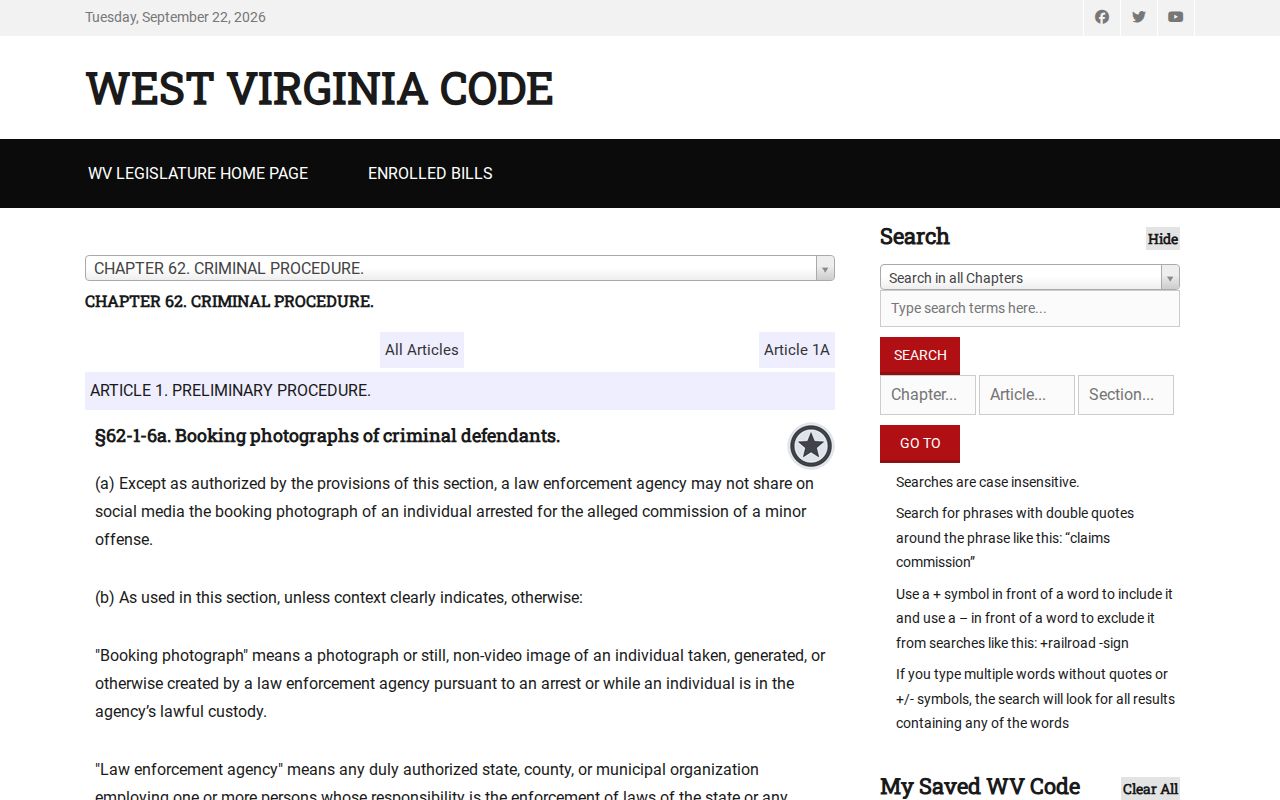
The statute only governs agency social-media sharing. It is not a blanket public-record exemption. Agency websites and news reports sit outside its reach, and so does every private copy. Nor is it a general photo ban or an anti-pay-to-remove law. Publication is allowed in a few situations. Conviction for the conduct is one. Another comes when an agency finds the person is a fugitive or an imminent public-safety threat and a post would help locate or apprehend them, or reduce that threat. A court may also order publication for a legitimate public interest. The law covers good-faith errors too. These exceptions belong to agencies and courts, not to private citizens weighing the risk themselves. See a wanted person? Send the tip to law enforcement, never confront anyone. A removal clause also runs on a 14-day clock. Once asked, the agency has 14 days to remove a qualifying post. Qualifying means the charge was dismissed, a grand jury declined to indict, the person was acquitted, or the conviction was reversed, vacated, or nullified. Name the exact post and attach the court order when possible; the deadline covers only the agency's own post, not newspaper archives, copied pages, or cached images.
The West Virginia Proposal That Stalled
The current rule arrived through 2023 Senate Bill 558. The official bill history shows passage in March 2023, the Governor's action, and an effective date 90 days later. Even so, it made no photo fully private. It created no broad removal system either. That bill aimed wider than the law on the books. The official 2024 House Bill 4621 history shows a push for broader limits on certain booking photos, including publication and payment-related removal terms.
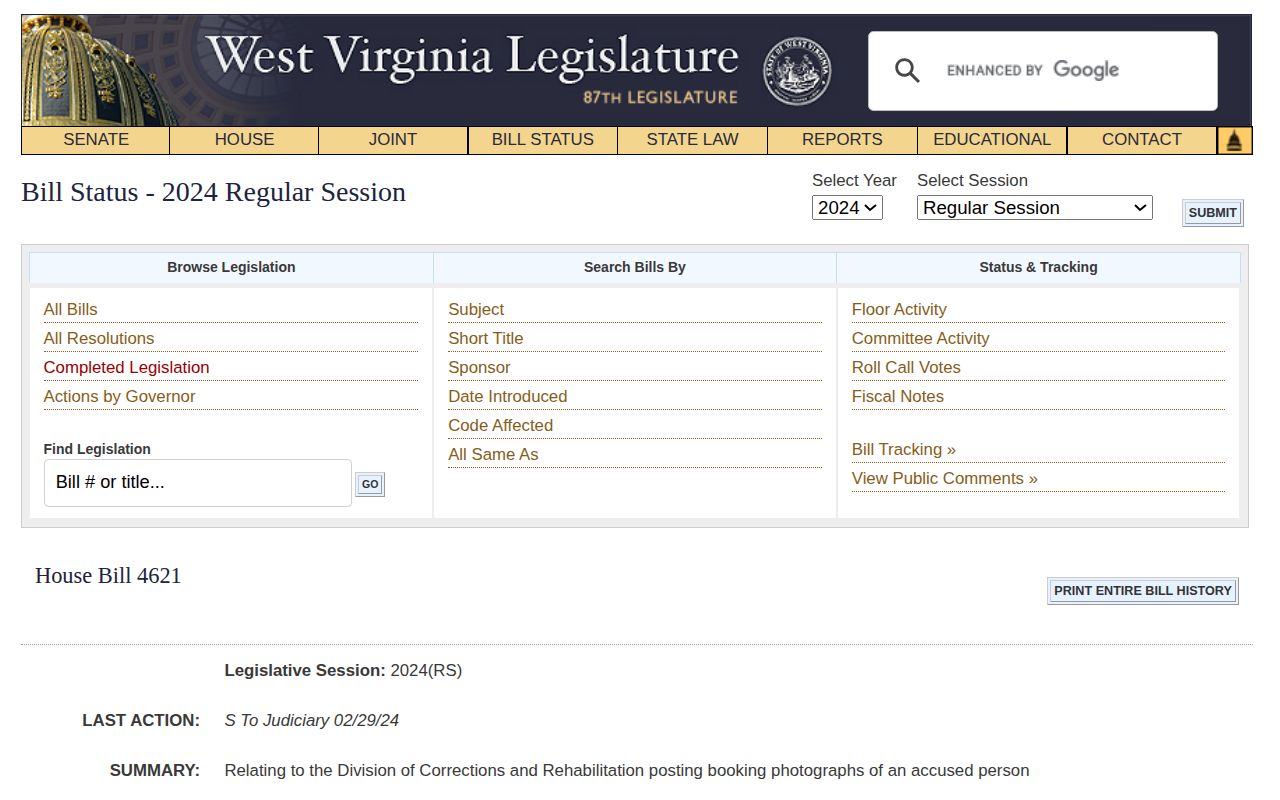
HB 4621 never became law. Its broader limits are not a current legal right. They are not a general ban on pay-to-remove practices either. Mistaking a bill for a statute leads to wasted requests and false hopes. Published appellate decisions squarely interpreting §62-1-6a remain scarce. That silence is not proof no related dispute has ever reached a courtroom.
West Virginia FOIA and Busted Records
West Virginia's Freedom of Information Act lets any person inspect and copy a public record unless an exemption blocks it. Start by sending a clear written request to the records custodian of the public body. West Virginia Code §29B-1-3 sets a five-day clock, skipping weekends and legal holidays. The custodian must then supply the record, arrange an inspection, or issue a written denial. Ask for an electronic copy. You should get one when the record exists in that format. Fees cover only actual reproduction costs. Staff search time is not billable.
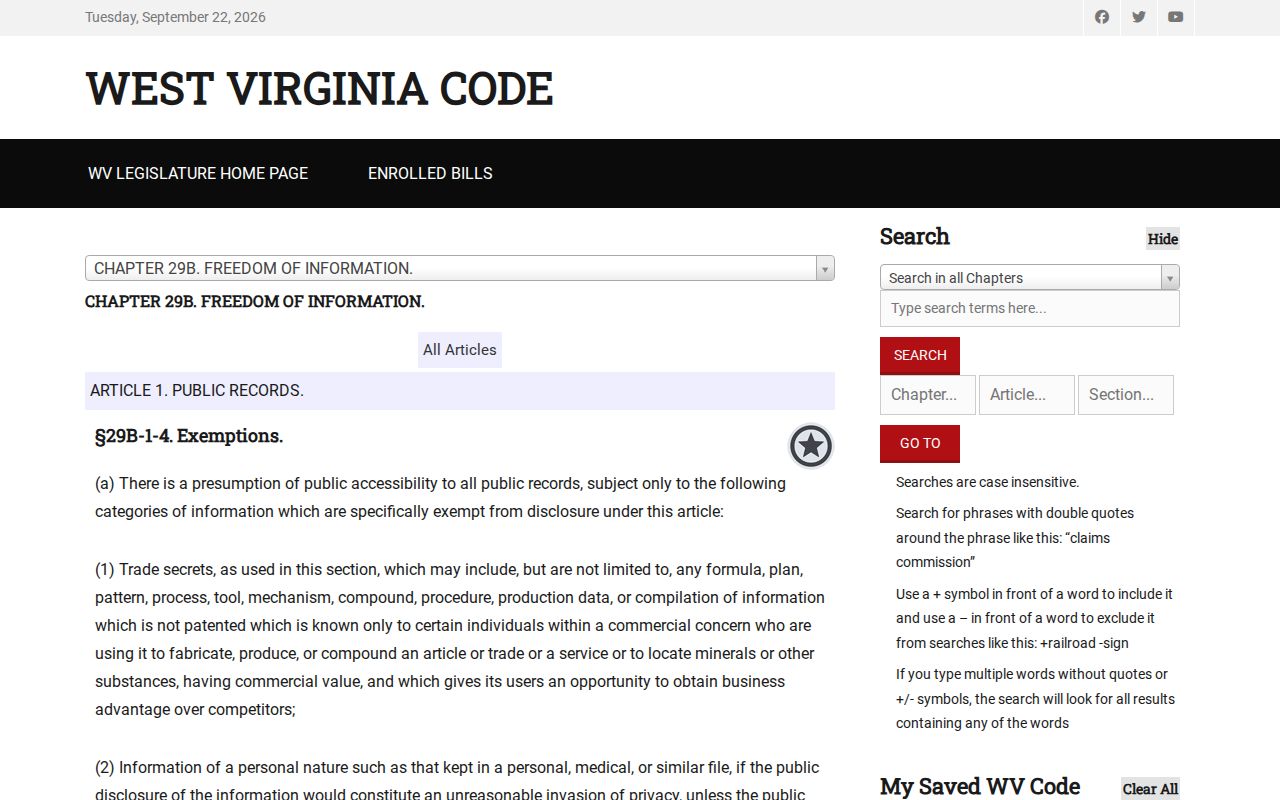
The FOIA exemption section carves out personal information whose release would unreasonably invade privacy, certain law-enforcement investigation records, and internal personnel matters. Other listed categories appear there too. Exemptions turn on the particular record and the facts around it. The statute never declares every booking photo public. Nor does it mark every one as confidential.
Keep a copy of the request and any written denial. A narrow ask beats a demand for every busted mugshot in the state, because reviewers can process it faster. Spell out the event date, the county, and the likely agency. Add the full name if you know it. Also name the exact record type, such as booking photo, booking sheet, arrest report, or a log of agency posts.
- Identify the agency that likely created or keeps the record.
- State a date range, county, name if known, and the record you seek.
- Ask for an electronic copy if the record is kept in that form.
- If the agency denies access, save the cited exception and any review or appeal instructions.
Note: Ask for an itemized copy charge and a clear legal basis for withheld records, then use the court docket to check the case outcome.
Juvenile Privacy and West Virginia Mugshots
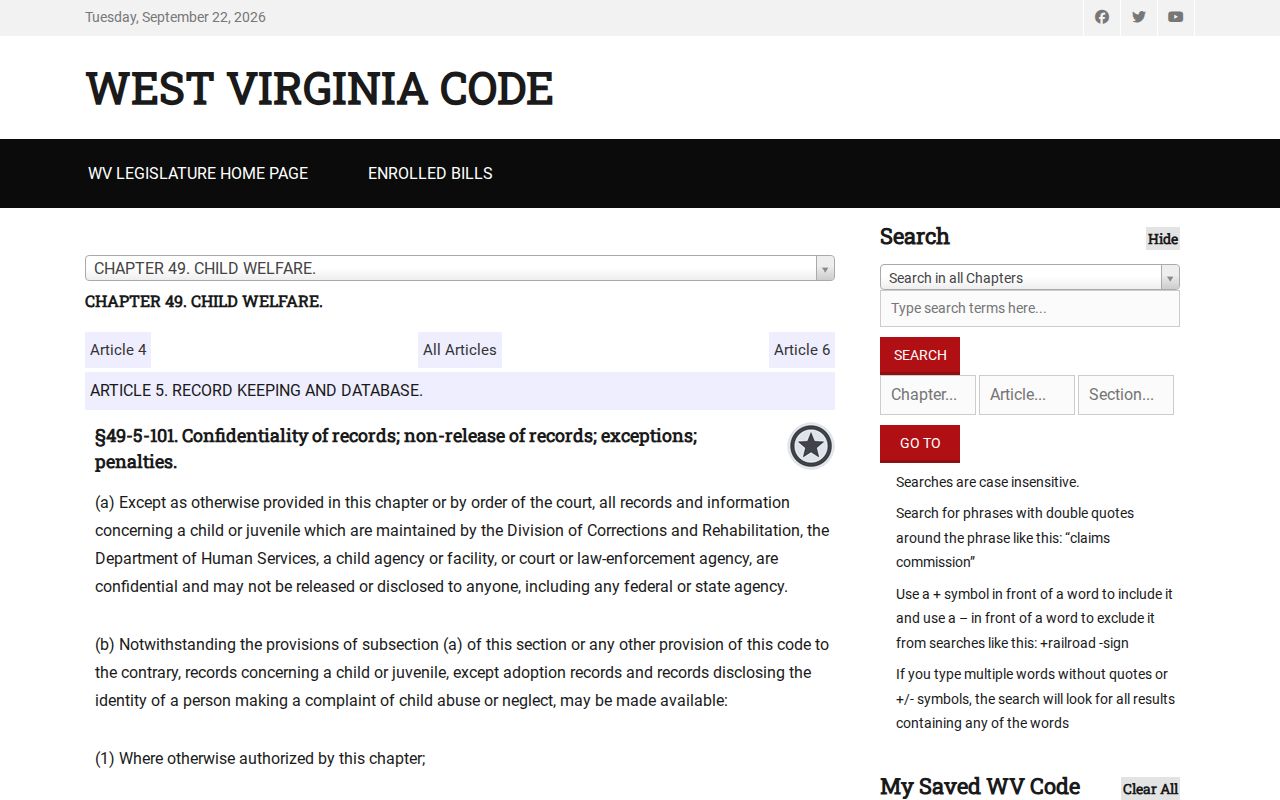
Juvenile records get far stronger protection than adult arrest records. West Virginia's juvenile confidentiality statute treats information about a child as confidential when it is held by law enforcement, the courts, the Division of Corrections and Rehabilitation, or child-serving agencies. Access is limited. The child, a parent or guardian, counsel, and others authorized by law or court order may qualify. A separate statute also restricts public access to juvenile court proceedings. That confidentiality is a strong reason to pause. Requesting or sharing a young person's booking photo deserves careful thought.
A name in the news carries no automatic right. It does not let anyone attach a booking image to that name. The juvenile proceeding records law works alongside Rules 49 and 50 of the Rules of Juvenile Procedure. Together they keep proceedings and records nonpublic. Sealing follows after the statutory period after age 18 or the close of juvenile jurisdiction. Exceptions exist, such as transfer to criminal jurisdiction. An arrest alone is no license to publish a juvenile's photo.
Note: A juvenile's publicly reported name, or the end of juvenile jurisdiction, does not by itself make every related record public.
West Virginia Expungement Reaches Mugshots
Expungement is a court process. It seals or removes records once the law's conditions are met. A person found not guilty may petition under the statute covering acquittals and dismissals. The same right belongs to one whose charge was dismissed. Dismissals traded for a guilty plea face limits. The law also reaches successful completion of certain pretrial diversion or deferred-adjudication programs. Records covered include arrest records, fingerprints, and photographs. Index references and other electronic or paper data tied to the charge are covered too. A petition generally waits at least 60 days after the acquittal or dismissal order.
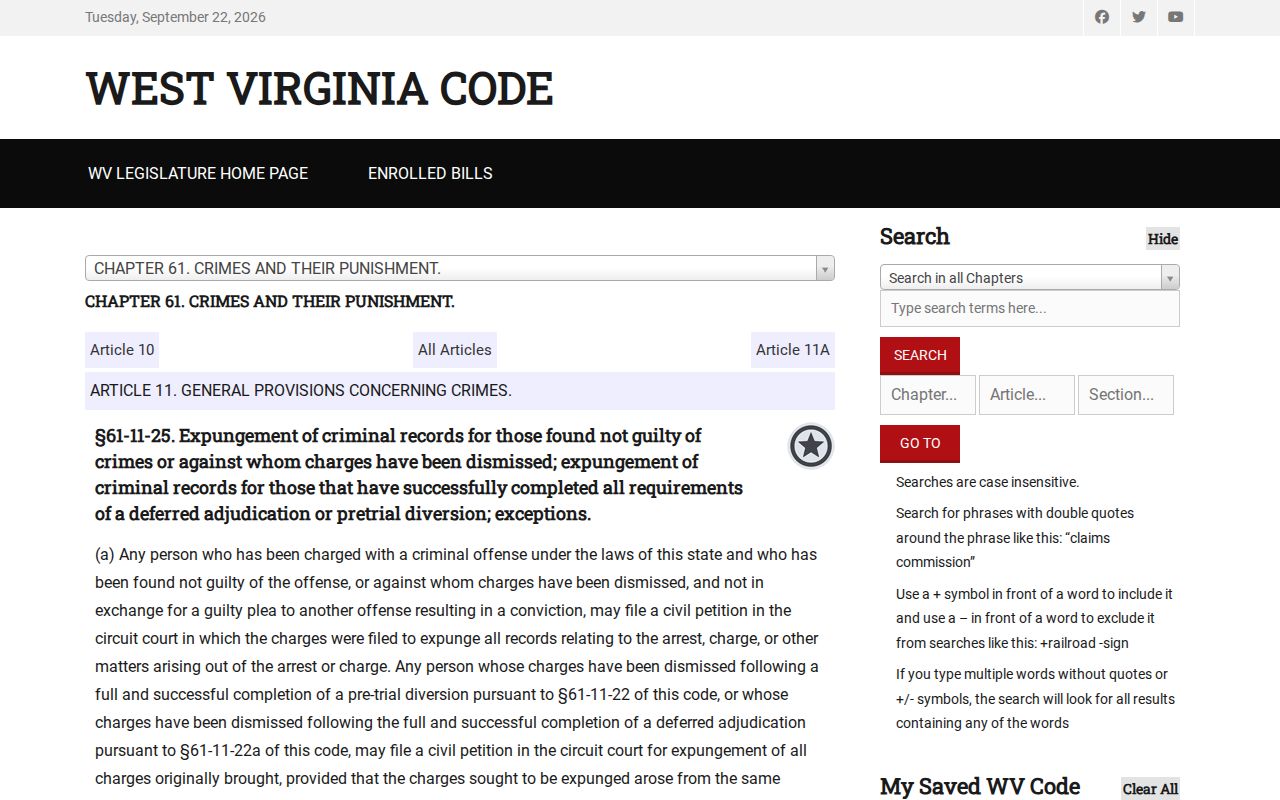
A granted petition lets the circuit court seal its own records. It can order other agencies, law enforcement included, to expunge theirs. An agency under such an order must certify completion to the court within 60 days. The order can reach an agency-held booking photo. It cannot erase a private copy on its own. The same goes for a news archive, a screenshot, or a search-engine index. Convictions follow a different route under §61-11-26. Waiting periods run one year for a single misdemeanor and two years for multiple misdemeanors. An eligible nonviolent felony calls for five years. The clock runs from conviction or the end of incarceration or supervision, as the statute directs. Listed offenses are excluded. These include violent felonies. Also excluded are specified crimes involving children, sex offenses, deadly weapons, and domestic violence. The conviction-based expungement statute controls eligibility and the petition process. The Judiciary supplies separate forms for acquittal or dismissal. Other forms cover misdemeanors and traffic citations. Felony violations get their own forms as well. Its official court-forms page lists forms SCA-C900, SCA-C903, SCA-C906, and SCA-C907. The page notes the forms are not legal advice.
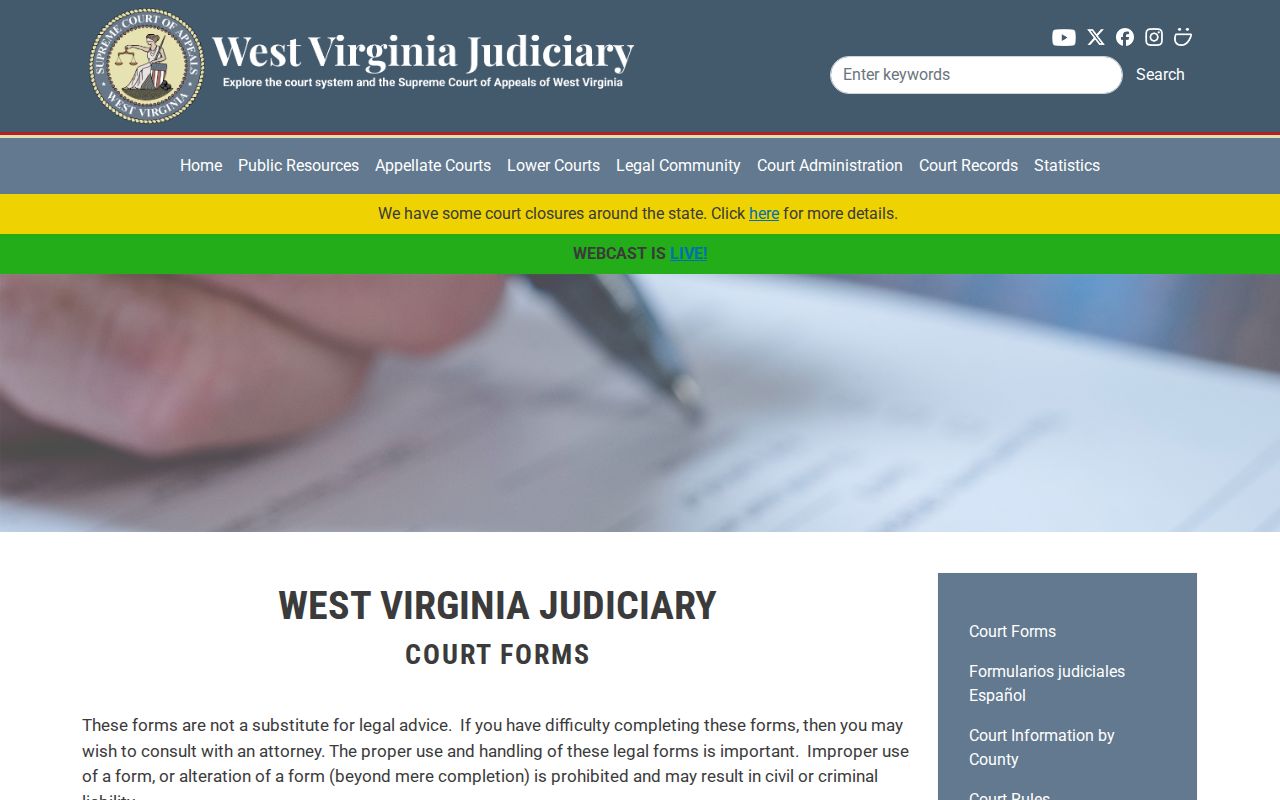
Pick the form matching the case type. Ask the circuit clerk in the county of arrest about filing steps. Once an order is signed, keep a copy. Deliver it to every agency that must comply. A court order fixes the official record. An independent publisher may still need a separate correction request.
How to Remove West Virginia Busted Photos
The photo may sit in an agency's social-media post. When the outcome qualifies, send the removal request to that agency. Identify the post URL, the name as shown, and the arrest or booking date. State the favorable disposition. Attach the court order if you have one. The statute's 14-day duty applies only when its conditions are met. A request aimed at the wrong agency will fail. It cannot make a private copy vanish.
Several errors support a clear correction request to the record holder. These include a wrong-person image, a factual error, or a juvenile record. A signed expungement order also qualifies. An accurate report someone simply dislikes is not removed under the same rules. Log the request date. Keep a copy of what you sent. Send no more personal data than the agency or operator needs to find the entry.
- Save the exact page address and note which agency or publisher controls it.
- State the correction or legal reason, with the matching date and case details.
- Attach a relevant disposition or signed court order, with unrelated private details covered.
- Ask for written confirmation, then check whether separate copies remain elsewhere.
A disposition is the official outcome of a charge. A vacated conviction is one a court has set aside. Those records help explain why a removal request is being made, though the request itself is not an expungement order.
Free Opt-Outs for West Virginia Mugshots
Third-party arrest sites are not West Virginia agencies. Their entries can be stale, mislabel a county, omit a later court result, or keep showing a photo long after the source changed. Check the agency or court record first. Any listing that survives on an independent site is governed by that operator's own page and correction policy.
| Operator | Free policy described in its materials | Limit |
|---|---|---|
| Busted Newspaper | Free listing request with the exact URL, reason, and supporting records. | Operator review; the stated review estimate is not a guarantee. |
| RecentlyBooked | No-fee removal, suppression, or correction request. | Its policy says accurate current public records are generally not removed on request alone. |
| Mugshots.com | Free document-based record maintenance. | Removal and a favorable-outcome update are different requests. |
These policies belong to private operators, not to state law. Busted Newspaper asks for a URL, a reason, and proof. It gives a review estimate of about five to ten days. RecentlyBooked lists no-fee requests for removal, suppression, or changes. Even so, it says an accurate, current public record stays up. That holds no matter who asks. Mugshots.com describes free document-based removal or updates. Its review period runs up to ten business days. Treat those time frames as the operators' own claims. No request is guaranteed acceptance, and search results can lag behind the source page. A search index updates separately, so a result may persist after its source changes. No court order deletes every outside copy on its own.
Beware of messages that pose as a court or agency. They demand payment for a guaranteed deletion. Use the official agency contact and the operator's documented free route.
Note: A private operator's free policy cannot replace an expungement order or create a state-law duty to remove a separate copy.