
West Virginia Busted Mugshots
A booking photo is an identification image taken during an arrest or custody event. The booking record is broader. It links a person to an agency action and can carry an event date, a facility or agency name, a charge or hold, and a photograph when one becomes public. Different offices create and hold these pieces. A local police department or sheriff may make the arrest, and West Virginia's regional jail system can hold the person after transfer. State corrections then records its own admission and custody data.
Which source fits depends on the person's status. A fresh arrest may surface first in an agency report or the WVDCR Daily Incarcerations view. Someone sitting in a regional jail may appear in the WVDCR jail search. A sentenced state prisoner belongs in the prison search. Court portals track case events, not booking photographs. A released person may drop out of a live custody search, though an agency record can still be requested under state law.
Match the record to the custody event. One photo comes from one arrest. The same person can appear in a jail search, a court file, and an old repost at once, so confirm the name and date before you conclude you have the right match.
Booking Record Fields
West Virginia has no single statewide booking-card format that every sheriff and city uses. The local report, the WVDCR screen, and the court file each answer different questions. The table splits common field types from the ones that vary by system. It shows what an agency actually returns. That is no promise. Not every page carries each item.
| Record field | What it can show | Scope and limit |
|---|---|---|
| Name and event date | The person named in an arrest or admission entry and the date or time shown for that event. | Match the county, agency, facility, and date. A similar name is not proof of identity. |
| Agency, county, or facility | The arresting agency or the location named in a custody record. | A regional jail can serve several counties, so the current facility may differ from the place of arrest. |
| Charge or hold | The charge wording or hold reported at intake or on a daily arrest report. | It records an charge or custody basis. |
| Booking photograph | An identification image, if that system makes one visible. | WVDCR policy calls for front, left-profile, and right-profile images; the front image is the OIS header. Public display can differ. |
| Case or court link | A “More Info” or court-order route may connect an OIS entry to case material. | The judiciary index is the place to verify later filings and disposition; it is not a photo feed. |
Monongalia County's daily-arrest PDFs show how one local format can differ from a photo roster. The reports list names, booking date and time, charges or holds, and agency information. No photographs appear in those PDFs. Bond data and final dispositions are missing too. Other agencies may publish even less. A records request can return a paper or electronic record rather than a searchable card.
Note: Treat a missing field as unavailable in that source, not proof that the event or record does not exist.
Request West Virginia Booking Records
The West Virginia Freedom of Information Act gives anyone the right to inspect or copy a public record. That right stands unless an exemption applies. Under §29B-1-3, the public body generally has five days. Weekends and legal holidays do not count. In that time it must provide the record, arrange inspection, or issue a written denial. An electronic record can be requested in electronic form. That option applies when it exists that way. Fees stay limited to actual reproduction costs, not staff time spent searching. The custodian still screens each record for statutory privacy, investigation, and security limits.
Send the request to the agency that likely holds the record. For a county or municipal arrest, that means the arresting department or the sheriff's records custodian. The West Virginia County Directory routes to each locality site and its official source path. For a WVDCR admission or prison record, follow the agency's FOIA request policy. Ask for a specific event and record type, not a statewide batch of images.
- Give the person's name if known, the arrest or booking date range, the county, and the arresting agency or facility. Say whether the request concerns a photo, booking record, arrest report, or release/disposition field.
- Send it to the custodian for the arresting agency or to WVDCR when its system created the record. Ask for an existing electronic copy when that format is available.
- Ask the custodian to identify the legal exemption for any withheld part and to separate releasable fields where possible. Keep the response and request date with the record.
- If the online screen lacks a record or image, ask the likely custodian directly. The FOIA right is a right to request and review, not a promise that every image will be released.
No single statewide retention period governs mugshots in West Virginia. The schedule depends on the agency and the record series. A request can ask which approved retention schedule applies. It can also ask whether a record was transferred or lawfully disposed of. If a court granted expungement, the order matters far more than an old web copy. So does the record's current status.
The request timing and copy-cost rule appear in West Virginia Code §29B-1-3. That is the state's FOIA access provision.
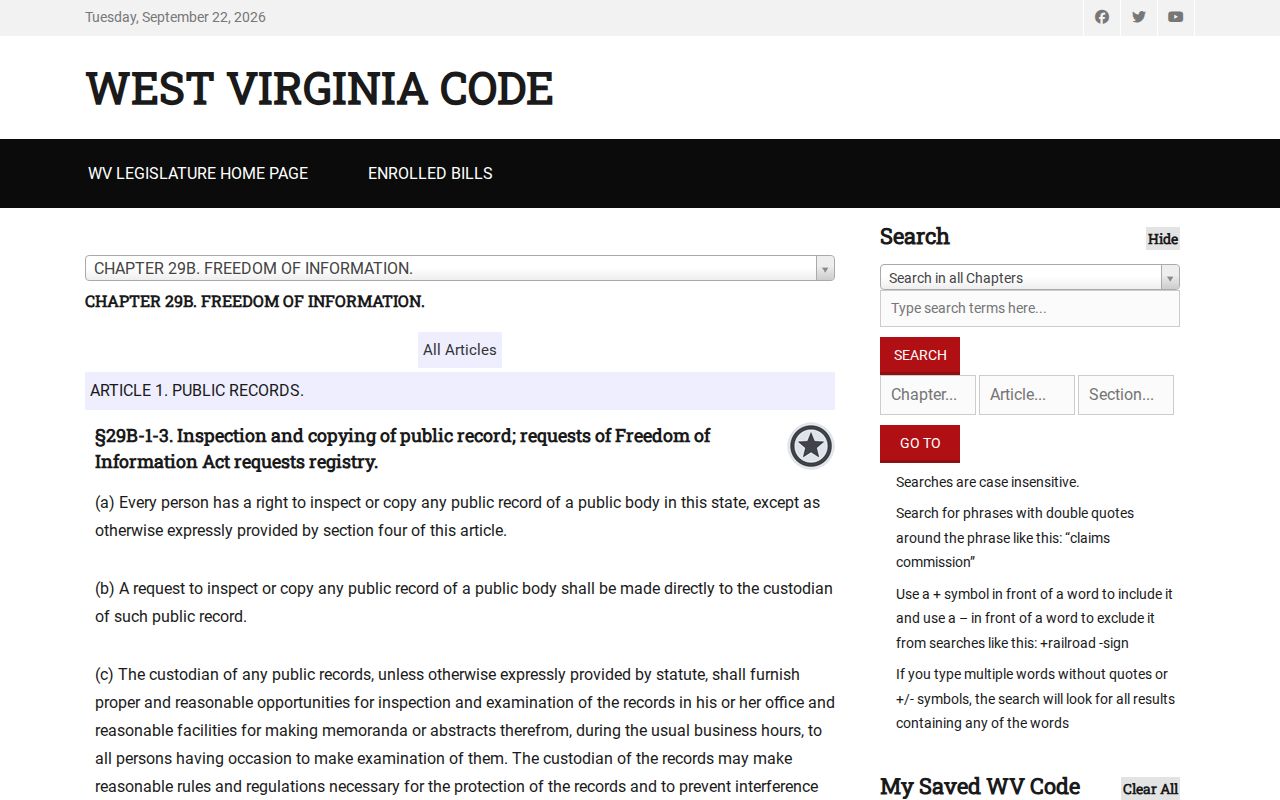
The state statute sets the request and response framework. It does not require a custodian to publish every image on a public roster.
West Virginia Mugshot Law
West Virginia Code §62-1-6a tackles one specific habit. It covers an agency posting a booking photo on social media after an arrest for a qualifying minor offense. It is narrow. Nothing in it bans publication of booking photos everywhere, and it does not make every image confidential under FOIA. To define minor offenses, the statute points to eligible misdemeanors and nonviolent felonies. Listed traffic and DUI categories count too. There are exceptions too. Conviction counts. A finding that the person is a fugitive or an imminent public-safety threat also counts. So does a court order grounded in legitimate public interest.
One more wrinkle deserves attention. The law leaves the Division of Corrections and Rehabilitation outside its definition of a law-enforcement agency. The WVDCR offender search is a custody system rather than a sheriff's social-media post. Removal is the other big piece. If a charge is dismissed, a grand jury declines to indict, or an acquittal comes in, the agency must take its post down within 14 days of a request. The same duty applies when a conviction is reversed, vacated, or nullified. That duty covers the agency's own post only. A news story, an independent repost, or a search-engine copy stays put on its own terms.
Senate Bill 558 put this law on the books in 2023. A 2024 follow-up, House Bill 4621, aimed wider. It never passed. West Virginia has enacted no broad pay-to-remove ban. For the separate agency, court, and private-site paths, see Are Mugshots Public? The operative text sits in West Virginia Code §62-1-6a itself.
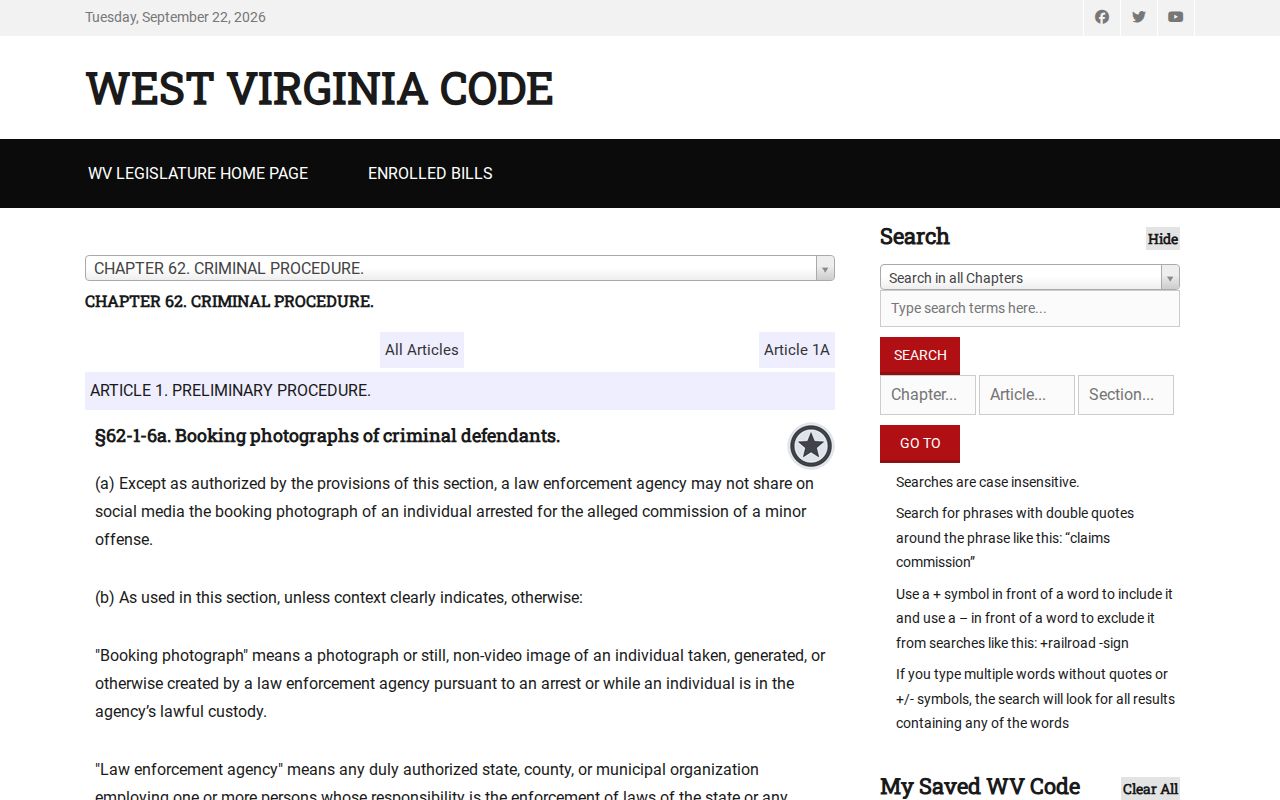
The statute governs agency posts in one defined setting. It does not erase every photo from every source. Juvenile confidentiality follows a different law, West Virginia Code §49-5-101.
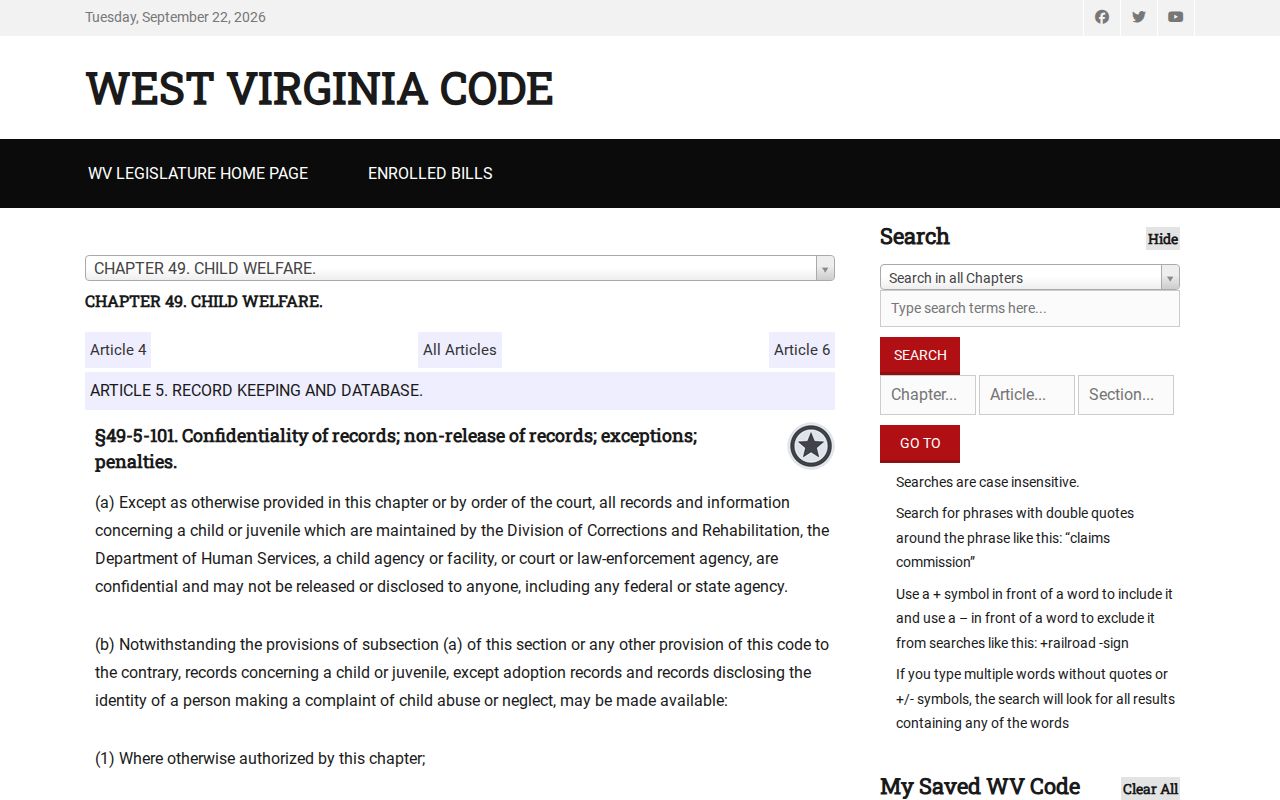
Juveniles get their own confidentiality framework. A name that surfaces in public reporting does not make a juvenile booking photo fair game to reproduce.
A favorable court outcome does not scrub independent websites on its own. Use the official court and agency process. Then go to each outside publisher directly, through its own free correction or removal route where one is documented.
Note: House Bill 4621 is legislative history, not current law, and should not be described as an enacted statewide removal right.
Where Busted Mugshots Appear
West Virginia runs a statewide corrections search. Yet no county-operated photo roster covers all 55 counties. Official sources come first, and each one has a job and a limit. When a match comes up empty, move to the next custodian rather than to any assumption about guilt, release, or identity.
| Source | What it can show | Photo and status limit |
|---|---|---|
| WVDCR official search | Daily admissions, jail custody, prison records, and absconder routes. | Custody and corrections scope; not every arrest, local hold, or public photo. |
| County or city agency | A local report, release, alert, or records response where that agency publishes one. | Posting practices vary; not every report has a photograph. |
| West Virginia Judiciary | Circuit and magistrate case indexes, filings, and later case events. | Case information, not a statewide booking-photo or warrant database. |
| Federal BOP or ICE | Custody searches within each federal system's scope. | Neither locator is a public booking-photo archive; absence is not proof of no arrest. |
| News outlets | Event-driven reports, agency statements, and some court outcomes. | Images may be file, scene, hearing, or agency images; check the caption and source. |
| Private indexes | Copied or indexed arrest material that may point to an event. | Secondary, time-sensitive, and potentially incomplete or stale. Verify with the official custodian. |
For a case event, start at the Judiciary's Court Record Access page. It lets you pick the circuit or magistrate search. For custody, use the agency search. Keep the two apart. An undated blend answers nothing. The court record and the current location speak to different questions. The Court Record Access page remains the official starting point for the Judiciary's case indexes.
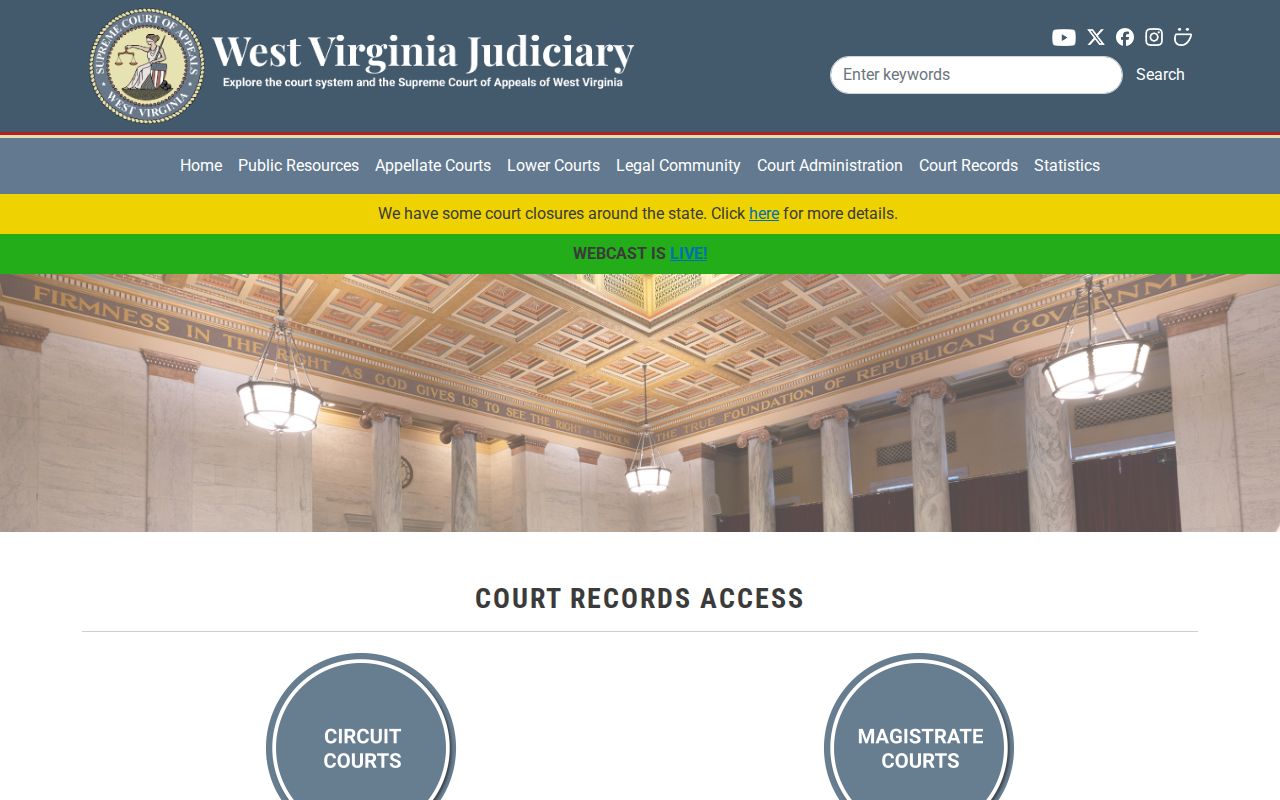
The Judiciary spells out what its access links cover. For certified copies and local docket questions, the circuit clerk is still the source.
Find West Virginia Busted Mugshots
Start with what you already know. An approximate date, the county or city of the arrest, and the arresting agency give you traction. West Virginia's regional jail system adds a twist. The place of arrest and the later custody facility may not be the same. A statewide index helps locate a record, but a name-only match can be wrong. Move from the arrest event to custody, then to court status. Keep the source and date beside each result.
- Identify the arresting county or agency from a reliable notice, court filing, or other record. Use the County Directory to open that locality's official source path.
- Check the current WVDCR Daily Incarcerations or jail search for a recent regional-jail admission. Record the facility and displayed date, and do not read the result as a conviction.
- If the person was released or the live search has no match, ask the arresting agency for the specific booking record or photo. Online absence does not establish that no record exists.
- Use the court portal and clerk to verify the charge, hearing, plea, dismissal, or disposition. A docket entry needs a careful name, county, and date match.
Does the custody result show a prison sentence? Shift to the WVDCR prison search. A juvenile record calls for restraint. Do not seek or circulate a booking image through an adult search path. When a third-party page leads the results, treat its date and source as a lead only, then confirm with the responsible agency or court.
Busted in West Virginia: Regional Jails
Regional custody changes where a photo or booking entry may live. A city officer or county deputy makes the arrest. The person then goes to a regional facility serving several counties. That transfer does not turn the facility's record into a county-hosted arrest feed. Keep three labels straight. The first label is where the arrest occurred. The second is the agency that made the bust. The third is where the person is held now, and mixing them leads people to the wrong office.
:WVDCR facility pages sort the regions into groups. These include Central, Tygart Valley, Potomac Highlands, Southwestern, Southern, South Central, Western, and North Central. The agency's North Central Regional Jail page names that one facility. Yet the person record still lives in the WVDCR information system. A county directory entry simply routes you to the arresting locality. It is not a claim that the county runs a jail photo database.
Admission tells its own story. LiveScan captures a front image plus left and right profiles. The tool then uploads them to the Offender Information System. Meanwhile, the offender-records policy treats the front image as the OIS header. That workflow guarantees nothing about public display. It does explain one gap. A county may show no image card while the WVDCR screen has one. The current menu for these tools sits on the WVDCR Offender Search hub.
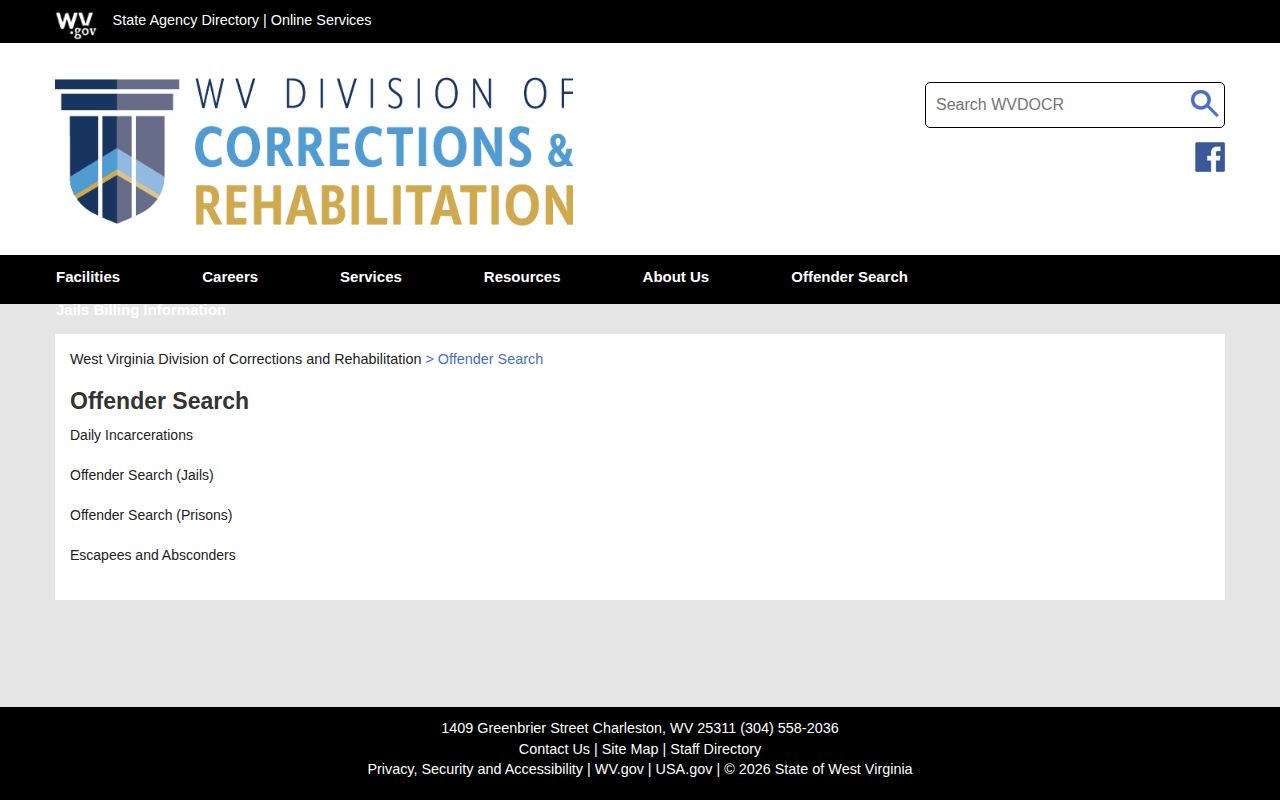
The official hub links to daily, jail, prison, and escapee or absconder routes. Check the current destination there, since live tool paths can change.
Note: Regional-jail geography is a reason to verify facility and arrest county separately, not a shortcut for guessing either one.
County Feeds and Busted Posts
The county research files do not verify a uniform sheriff-operated photo roster statewide. Some offices publish wanted lists, press releases, alert notices, or social posts; those are not the same as a current booking database. The most specific verified county example is Monongalia County, where the sheriff's daily activity and arrests list links to paired PDF reports. The researched report is text, not a verified mugshot feed. It names people, booking date and time, charges or holds, and agency information.
Wheeling illustrates another type of public-facing tool. The city's CrimeMap is an incident map with an update pattern of about 12 hours, filters, and daily-email options. It is useful for incident information, not proof of a booking or a photo. Metro-area news coverage can also make arrests more visible than rural events without giving any county a complete public photo index.
The Monongalia Sheriff news list provides the linked daily-arrest report index.
Start at the sheriff's own index for Monongalia reports, and remember the PDFs stay text-only. Bond amounts and court results do not appear there. The city calls its Wheeling CrimeMap an incident tool, nothing more.
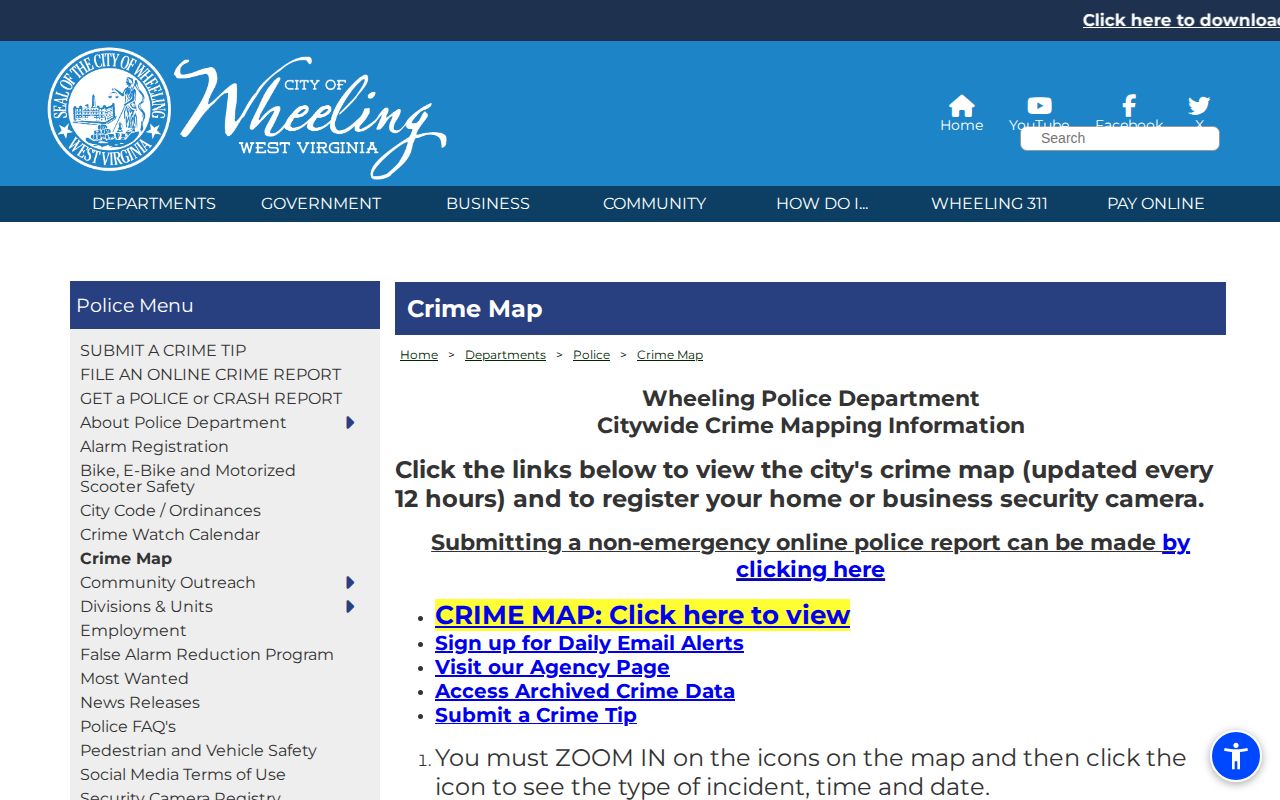
An incident map is not a release list. Anyone who needs an actual arrest record should go to the arresting agency or the court that holds the file.
Court Status After Booking
A booking entry records the charge as first written down. The court file tells a different, fuller story later. That story might end in a dismissal, a plea, an acquittal, a conviction, diversion, or an expungement filing. A few terms help here. "Disposition" means the outcome the court records. "Arraignment" is the early hearing where charges are read and a plea can be entered. "Bond" is the court's condition for release while the case waits.
- Booking
- Administrative steps after arrest, which can include identity records and photographs.
- Disposition
- The court's outcome for a charge or case.
- Expungement
- A court-ordered legal process that seals or removes qualifying records under state law.
- Regional facility
- A corrections site that may hold people arrested in more than one county.
West Virginia's court access page connects to statewide circuit and magistrate indexes. Those portals help you find a case number or a docket event. They stop short of a full electronic file, though. A shared name proves nothing by itself. For certified copies, the county clerk or circuit clerk is the right source. Local docket questions go there too. Match the county, the date, and the agency. Then read the docket's later entries rather than stopping at the charge headline.
Expungement has its own statutory paths in West Virginia. For an eligible acquittal or dismissal, §61-11-25 counts photographs and electronic data within its record definition. It also lets courts order agencies to act. Other qualifying convictions may fall under §61-11-26 or §61-11-26a instead. Filing rules, timing, and exceptions all differ. An outside publisher does not automatically receive the court order. So these legal paths get fuller treatment on the linked state-law page.
WVDCR Offender Search
The West Virginia Division of Corrections and Rehabilitation runs the state's public offender-search hub. It is known as WVDCR. Its tools include Daily Incarcerations, a jail offender search, a prison search, and escapee or absconder listings. For current or indexed regional-jail records, the jail system is the right WVDCR path. The prison route covers people in state-prison custody. Keep the limits in mind. These are corrections records, not a tally of every local, state, or federal arrest.
Name searches work through a last-name field. It generally wants at least three letters, plus an optional first name and a verification step. The live interface can change. A result may list a name, a facility or location, and a photo when one exists. It may also show admission or booking data plus a "More Info" or court-order link. Date of birth, case numbers, bond, charge details, and photos vary by screen and record. Check each result against the agency, date, and facility before trusting it.
WVDCR itself warns that public data shifts fast. It may be incomplete or delayed, and it can miss a person's current location or status. The court record controls the underlying criminal action. Former-offender visibility is not permanent either. No fixed public retention rule governs photographs of released people. A person vanishing from search does not prove expungement. The official search hub is the best starting point for the current tool set. The state offender-search hub also describes the prison-search route.
Think of the public search as a custody and offender tool. It is not a statewide feed of every recent arrest or booking image.
Note: VINE sends custody and release notifications; it is not a photo archive or a substitute for the court docket.
Federal Custody Searches
Federal custody sits outside state and county systems. You need separate tools. The Federal Bureau of Prisons locator tracks federal inmates from 1982 forward. Search by register number or name, with demographic filters. It finds people, not photos. A missing result has several explanations: local or state custody, pretrial holding, release, or life beyond the locator's scope.
The ICE Online Detainee Locator is narrower. It covers people currently held by ICE plus some recent releases. Exact identity details are required. ICE excludes minors and admits the list is not complete. No public booking-photo field exists. The Marshals Service has no national detainee-photo search either. Federal case files often demand a district, court, facility, or FOIA request.
So respect each agency's limits. A match from BOP, ICE, WVDCR, or a county roster proves nothing beyond that system. A no-match means just as little. The federal tool lives at the BOP Inmate Locator.
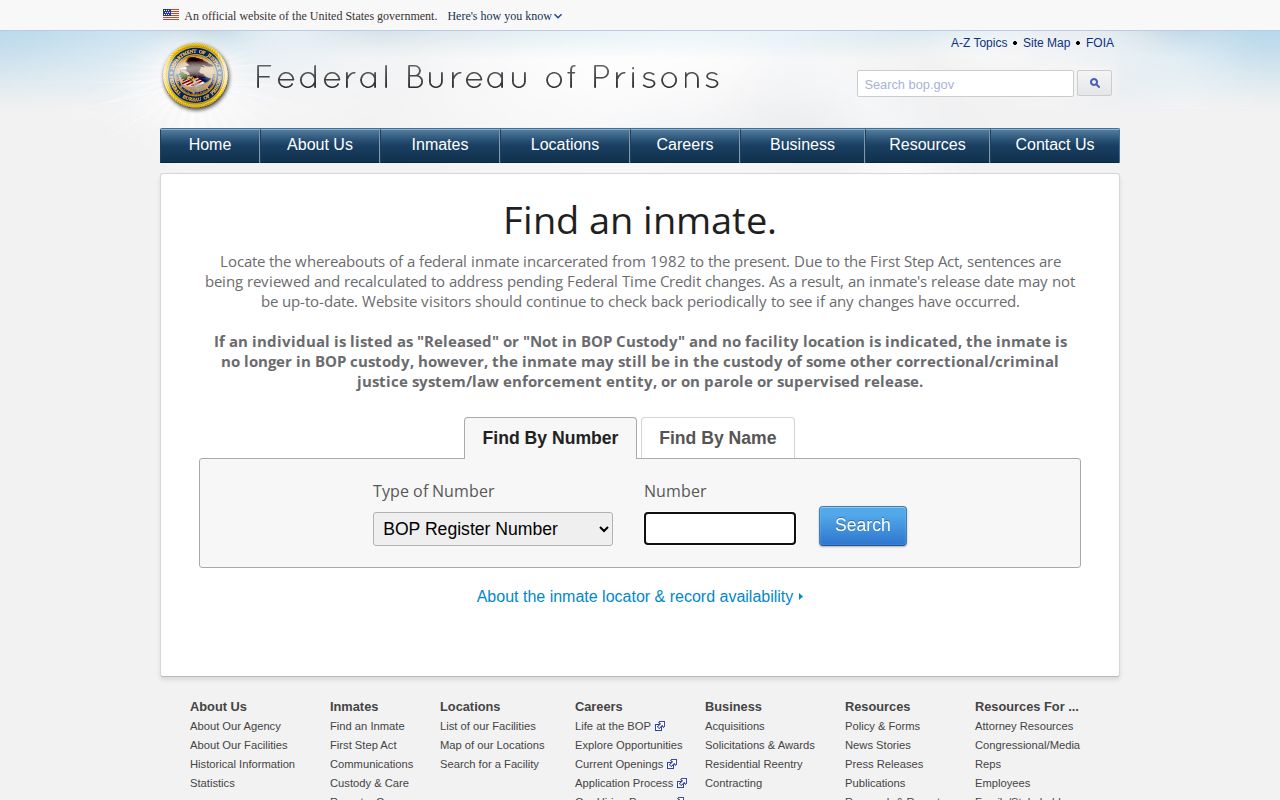
The BOP locator identifies people in federal custody. It is not an all-arrests or photo search.
Third-Party Busted Listings
Official pages change; copies linger. Private busted sites survive on that. West Virginia sections exist for Busted Newspaper, RecentlyBooked, Mugshots.com, and Arrests.org. Their county pages may hold older reposts, a date, a charge, or an image. None are government rosters.
Labels and schedules are operator claims. They do not count arrests. Stale, incomplete, and duplicated entries show up. Some posts even land in the wrong county. A person absent from these pages may still sit in custody or have an open court case. A person listed may already be free, or the charge may have been dropped later. Check the source agency and court status before repeating anything. The Busted Newspaper West Virginia page serves as the private-directory landing for the state.
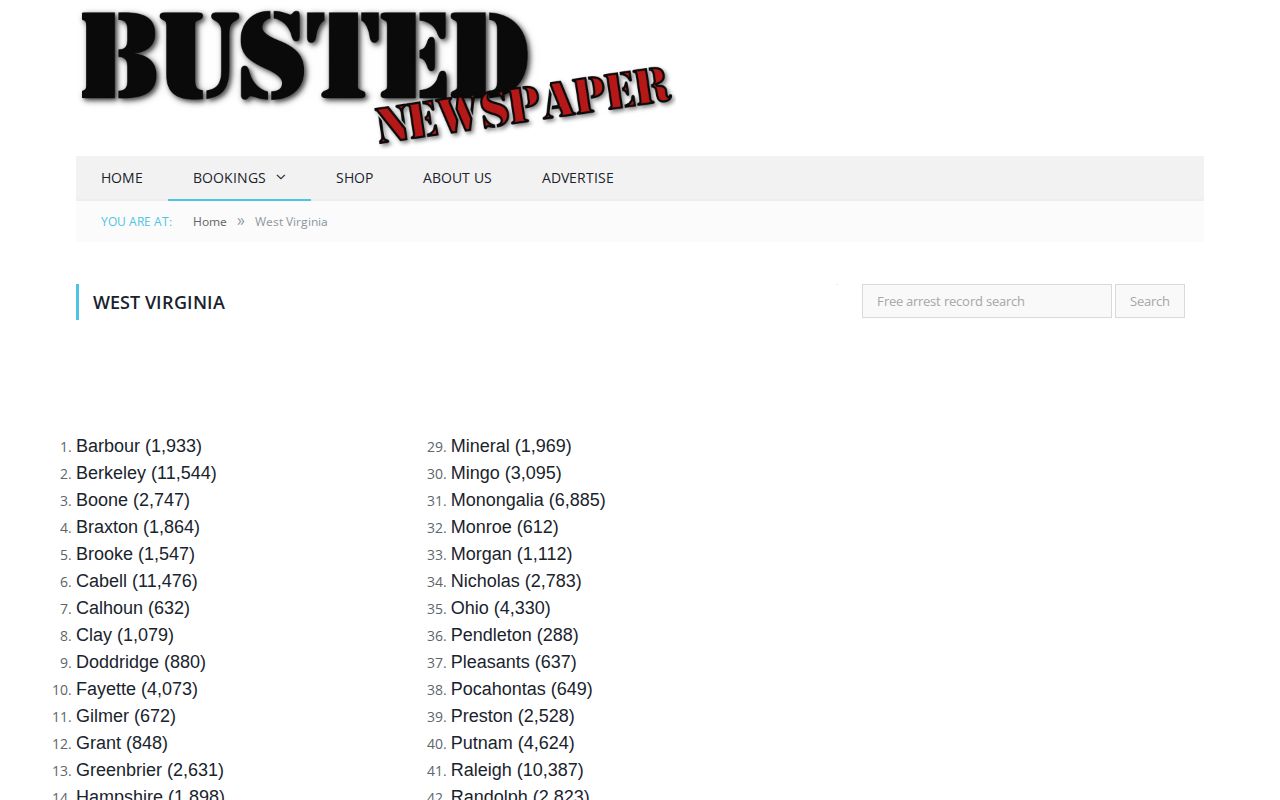
The operator's own disclaimer tells you to verify the record. It does not make a copied card official. Mugshots.zone lists no West Virginia section. No state page and no county page. Its general removal text does not set up a local listing or a West Virginia process. No outside publisher can promise that a cache, screenshot, or news story will vanish just because an agency changed its own record.
Older Busted Mugshots and Archives
West Virginia posts no single online archive of every historic booking photograph. The State Archives fills only part of that hole. It holds penitentiary records and selected institutional photo collections, with restrictions and limited digitization. The West Virginia Memory photo database holds more than 100,000 images. Still, only a fraction of state visual material is online. An archival portrait is not always a booking photo. A finding aid can point to an unviewable file.
For a recent image, ask WVDCR or the arresting agency. Older records take a different path. Search the Archives catalog and finding aids. Then ask whether the series holds a photograph, inmate card, admission register, or court file. Give the archivist a name, aliases, approximate date, facility, and county. Written requests face limits on number and scope. Copy and research fees apply under the Archives' process. Restrictions, privacy law, donor terms, or physical condition can block access.
Retention schedules set minimum periods and rules for transfer or disposal. Check the sheriff-specific and county schedules with the custodian. Regional-jail photos do not transfer automatically. A record missing from the live system may have been transferred, lawfully destroyed, withheld, hit by a system change, or never posted publicly. Ask before guessing.
Warrant Checks in West Virginia
A wanted-person list and a warrant database are not the same thing. The West Virginia State Police Most Wanted page gathers state fugitives, cold cases, WVDCR absconders, Eastern Panhandle entries, and federal lists. These are curated public notices. They leave out plenty of active local warrants. Court indexes can confirm a case. They are not statewide warrant searches either. A specific warrant question belongs with the court clerk or the law-enforcement office that issued it.
Start with a name and county. Then verify with the responsible office before acting. If the question is your own warrant, an attorney or the issuing court can explain safe next steps. Never approach, follow, or try to detain someone named in a notice. Call 911 for an immediate threat. Otherwise use the tip route on the agency's page. Warrant details and list status can change.
VINE works differently. It sends custody and release notifications once you register, but it cannot say whether a warrant exists. It is not a photo feed, and the official wanted lists post their own current notices and tip instructions.
Note: A name's absence from a public wanted list does not prove that no warrant exists or that a case is closed.